Paver Base Depth Guide: How Thick Should a Paver Base Be?
The base under a paver patio is the difference between a surface that stays flat for 20 years and one that dips, rocks, and heaves after two rainy seasons. The pavers themselves get all the attention at the store, but the base does all the structural work — it spreads the load, drains water away, and resists frost movement.
Here’s the honest answer on how thick it needs to be, the layers it should contain, and how much material that means for a real project.
The Short Answer
- Patio or walkway (foot traffic only): 4 inches of compacted crushed gravel, plus 1 inch of bedding sand on top.
- Residential driveway: 6 inches of compacted crushed gravel (up to 8 on soft or clay soil), plus 1 inch of bedding sand.
The 1 inch of bedding sand is the same in both cases — it’s a setting bed, not a structural layer. The variable part is the gravel base, which gets thicker as the load and the soil get worse.
These figures line up with the ICPI (Interlocking Concrete Pavement Institute) guidelines used by professional installers: 4″ minimum base for pedestrian applications, 6″ minimum where cars drive. Going thinner to save a little money is the single most common reason DIY patios fail.
Paver Base Depth by Project Type
| Project | Compacted gravel base | Bedding sand | Total excavation depth |
|---|---|---|---|
| Garden path / walkway | 4 in | 1 in | 7–8 in (base + sand + paver) |
| Patio, porch, fire pit area | 4 in | 1 in | 7–8 in |
| Residential driveway | 6 in | 1 in | 9–10 in |
| Driveway on clay soil | 6–8 in | 1 in | 10–12 in |
| Driveway in freeze-thaw climate | 6–8 in | 1 in | 10–12 in |
| RV / boat parking pad | 8 in | 1 in | 11–13 in |
Excavation depth includes the pavers themselves: a standard paver is 2⅜ inches thick for pedestrian use (2¾–3⅛ for vehicular), so a patio needs roughly 7–8 inches of dig-out total. Mark that depth on a stake before you start excavating — it’s easy to dig too shallow once the hole is open.
What Goes in the Base (Layer by Layer)
Depth only works if the layers are right. A thick pile of the wrong material is worse than a proper 4-inch base.
1. Compacted subgrade (the soil you dig into). Scrape out roots, topsoil, and soft spots. The native soil is then compacted — a plate compactor rented for about $60–$90/day does this job. If the soil is heavy clay, lay geotextile landscape fabric over it before the gravel goes in; it stops the clay from migrating up into your base and clogging its drainage. This is cheap insurance and one of the most skipped steps.
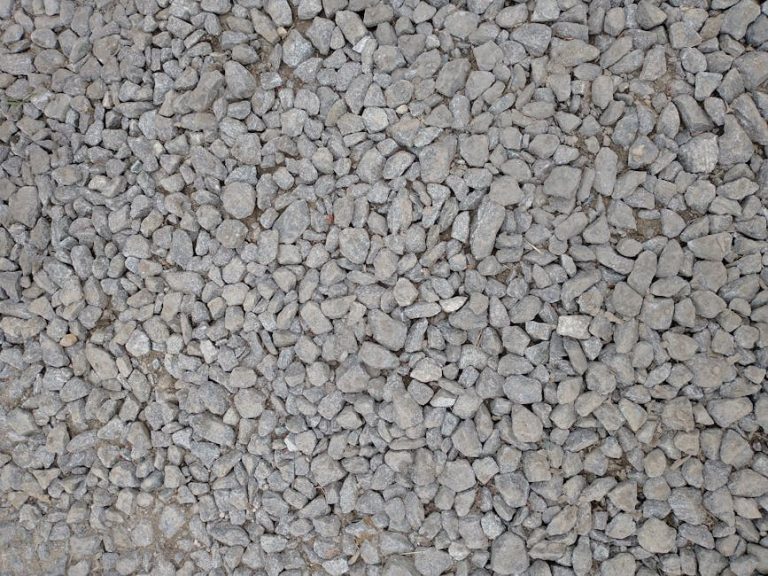
2. Crushed gravel base (4–6 inches, compacted). This is the load carrier. Use ¾-inch minus crushed stone / crusher run / 21A — the exact name varies by quarry. What matters: it must be *crushed* (angular faces that lock together) and *graded* (mixed sizes from ¾-inch down to fines that fill the gaps). Rounded pea gravel does NOT lock together and makes a terrible base — never substitute it.
Compact in 2-inch lifts: lay 2 inches loose, compact with the plate compactor (3–4 passes), then repeat. A base dumped in all at once and compacted only on top stays loose underneath, and loose underneath means settling later.
3. Bedding sand (1 inch, screeded, NOT compacted separately). Use coarse concrete sand or manufactured paver sand — again, not playground sand or masonry sand, which are too fine and round. Lay it between screed rails (1-inch pipe or tubing works), screed flat, and lay pavers directly into it. The final pass of the plate compactor — with a rubber mat so you don’t scratch the pavers — settles everything together.
4. Edge restraints. Not a depth layer, but worth naming: without aluminum, plastic, or concrete edge restraint spiked into the ground, patios creep outward over time and the perimeter pavers sink. It’s the cheapest part of the project and a common omission.
How Soil and Climate Change the Depth
The table above gives standard depths for decent soil. Two conditions call for more:
Heavy clay soil. Clay holds water and swells/shrinks with moisture — the worst base material in nature. On clay, go to 6–8 inches of base even for a patio, and always use the geotextile fabric. The extra stone spreads the load over soil that can barely support itself when wet.
Freeze-thaw climates. Where the ground freezes, water trapped in a thin base expands and lifts pavers (heave). A deeper base (6+ inches) with good drainage below it gives water somewhere to go. If you’re in the northern US or Canada, treat 6 inches as the patio minimum, not 4 — confirm with your local supplier, who knows your frost line.
One thing a deeper base does NOT do: it doesn’t replace digging out bad material. If your excavation reveals spongy, organic muck, dig it out and replace it with base stone rather than bridging over it with extra inches on top.
Compaction: Why 4 Inches Compacted ≠ 4 Inches Loose
Loose gravel compacts by roughly 15–20% under a plate compactor. That means to end up with 4 inches of compacted base, you need to lay about 5 inches loose (and compact it in 2-inch lifts as noted above). When you calculate how much material to order, use the loose volume — or just add 15–20% to the compacted volume.
Crushed 21A / crusher run weighs about 2,700 lbs per cubic yard (1.35 tons) when compacted. That figure is the one your supplier’s tonnage pricing is built around. See our guide on how we calculate for the densities behind the numbers on this site.
How Much Base Material Do You Need? (Worked Example)
Project: 12×12 ft paver patio (144 sq ft) with a 4-inch compacted base and 1 inch of bedding sand.
Gravel base:
1. Compacted depth in feet: 4 in ÷ 12 = 0.333 ft 2. Compacted volume: 144 × 0.333 = 48 ft³ 3. Compacted cubic yards: 48 ÷ 27 = 1.78 yd³ 4. Loose volume (add ~20% for compaction): 1.78 × 1.2 = 2.13 yd³ → order 2.25 yards 5. Weight: 1.78 yd³ × 2,700 lbs/yd³ = ~4,800 lbs ≈ 2.4 tons
So: order about 2.25 cubic yards / 2.5 tons of crushed 21A.
Bedding sand:
1. Depth: 1 in = 0.083 ft 2. Volume: 144 × 0.083 = 12 ft³ = 0.44 yd³ → order ½ yard
Sand isn’t compacted before the pavers go in, so no compaction add-on is needed (round up slightly anyway — screeding always wastes a little).
Skip the calculator math: our paver calculator runs this area-to-yards conversion for any patio size, and you can enter your supplier’s per-ton or per-yard price to get the project material cost.
Delivery check: 2.5 tons of gravel plus ½ yard of sand fits in a small dump load. Many suppliers charge a flat delivery fee of roughly $50–$150; some waive it over a minimum tonnage. Confirm with your supplier before ordering — delivery is the swing factor in small-project pricing.
Money-Saving Tips
- Excavate to the right depth the first time. Too shallow means ripping it up; too deep means buying extra stone. Stake your depth before digging.
- Rent the plate compactor, don’t buy one. A day rental is ~$60–$90 — a fraction of the purchase price, and you need it for two days at most.
- Buy gravel by the ton from a quarry or landscape supplier, not bags. Bagged paver base runs several times the bulk price per yard; it only makes sense for tiny repairs.
- Order the base and the sand from the same supplier on one ticket. One delivery fee instead of two.
- Don’t over-order “just in case.” Gravel doesn’t go bad, but a leftover pile sits in your yard for months. The 20% compaction allowance in the math above already includes reasonable slack.
- Never save money by using pea gravel, play sand, or “cheap fill dirt” as base. These are the exact substitutions that cause the failures a proper base exists to prevent — and re-doing a patio costs far more than the stone.
FAQ
Can I lay pavers on sand only, without a gravel base? Not if you want them to last. Sand-only installations settle unevenly within a season or two under rain and freeze-thaw. The gravel base is the structural part; the sand is just a setting bed. Even a small walkway gets 4 inches of compacted gravel.
How thick should a paver base be for a driveway? Six inches of compacted crushed gravel minimum, 8 on clay soil or in freeze-thaw climates, plus the standard 1-inch bedding sand. Use thicker vehicular pavers (2¾–3⅛ in) for driveways, not the standard 2⅜-inch patio pavers.
Do I need landscape fabric under a paver base? On clay or silty soil: yes, geotextile fabric between the subgrade and the gravel stops fine soil from migrating into the base and clogging drainage. On sandy, well-drained soil it’s optional.
Can I use crushed concrete (recycled) as paver base? Recycled crushed concrete compacts and drains similarly to virgin crusher run and is usually cheaper. It’s widely used in the trade. One caution: its fines content can vary, so confirm with your supplier that it’s graded for base use, not just fill.
How long does a properly built paver base last? The base itself essentially doesn’t wear out — it’s stone. A properly built paver installation (correct depth, compacted lifts, edge restraint, drainage) routinely lasts 20–30 years; the failures people see are almost always base failures (too thin, wrong material, or uncompacted), not paver failures.
What does paver base material cost in 2026? Bulk crushed stone / crusher run typically runs $35–$65 per cubic yard (or roughly $25–$50 per ton) before delivery, varying widely by region — quarries near you are cheaper than far ones. Bedding sand runs roughly $30–$55 per yard. Confirm with your supplier; these are ranges, not quotes.